What Is Karma in Astrology? Meaning, Types & How It Shapes Your Life

Karma in Astrology
Karma in Astrology is a fascinating concept that connects our past actions with present-life experiences. While astrology does not prove karma scientifically, many spiritual traditions believe that our birth chart symbolically reflects lessons, strengths, and challenges we are meant to explore during this lifetime.
Whether you’re curious about relationships, career, personal growth, or spirituality, understanding Karma in Astrology can help you gain deeper self-awareness and make more conscious life choices.

What Is Karma in Astrology?
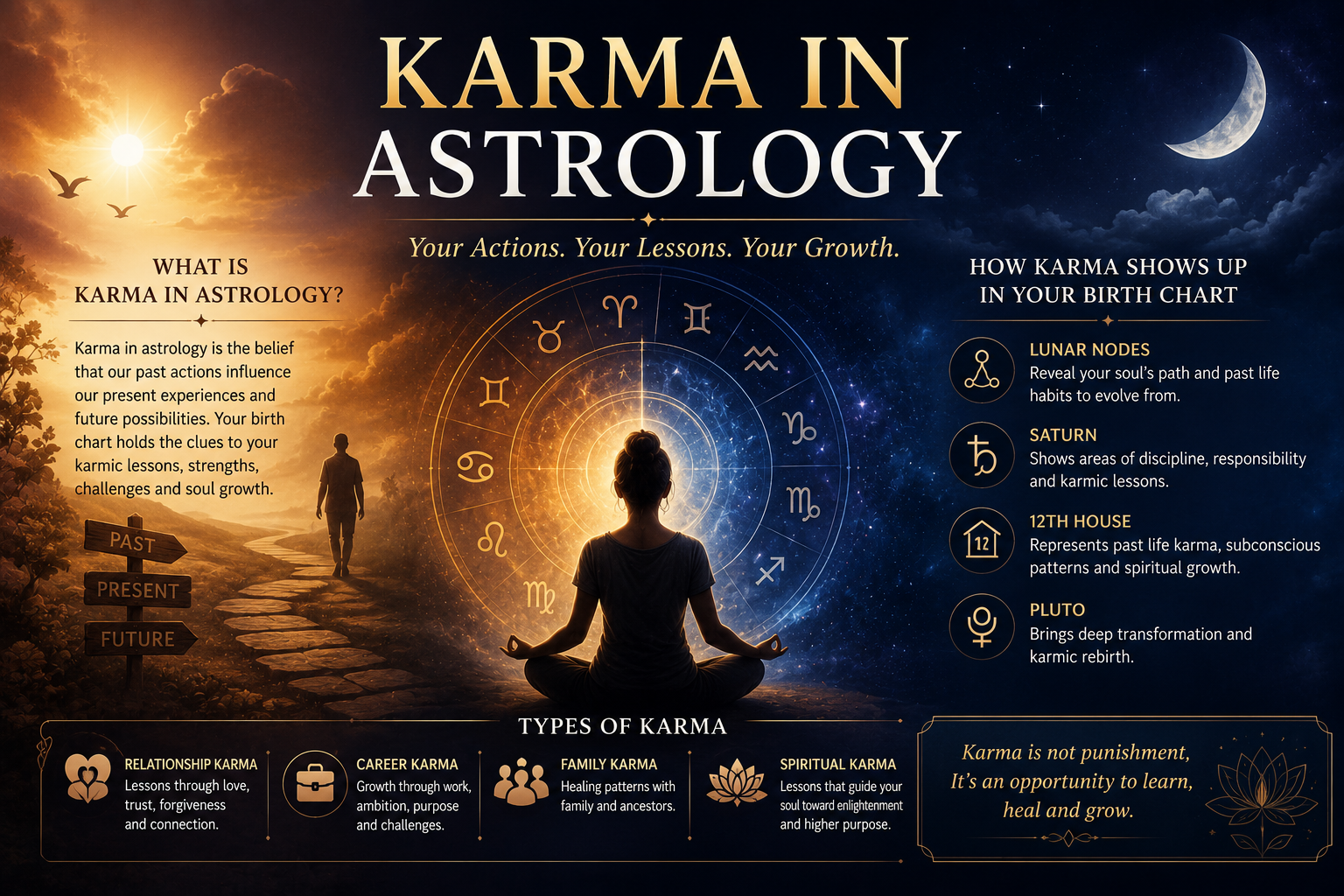
In astrology, Karma in Astrology refers to the idea that every action creates an energetic consequence. According to many spiritual beliefs, the experiences you encounter today may be connected to lessons carried from previous actions or ongoing patterns in your life.
Rather than viewing karma as punishment or reward, astrologers often describe it as an opportunity for growth, healing, and personal evolution.
Your birth chart is believed to provide symbolic insights into these life lessons through planetary placements, lunar nodes, Saturn, and other astrological influences.
How Does Karma in Astrology Work?
Astrology suggests that certain planetary positions may highlight recurring themes in your life. These themes often relate to:
- Relationships
- Career choices
- Personal challenges
- Emotional growth
- Spiritual development
- Family dynamics
The goal of Karma in Astrology is not to predict your future but to help you understand patterns so you can make better decisions moving forward.
Signs of Karmic Lessons in Your Birth Chart
1. The Lunar Nodes
The North Node symbolizes qualities and experiences you are encouraged to develop, while the South Node represents familiar habits or patterns you may gradually outgrow.
2. Saturn
Saturn is often called the planet of discipline and responsibility. Its placement may indicate areas where patience, persistence, and maturity are especially important.
3. The Twelfth House
Many astrologers associate the twelfth house with introspection, hidden strengths, subconscious patterns, and spiritual reflection.
4. Pluto
Pluto represents transformation, endings, renewal, and profound personal change. Its influence may encourage deep emotional growth over time.
Types of Karma in Astrology
Relationship Karma
Some people feel they repeatedly encounter similar relationship challenges. Astrology can encourage reflection on communication, boundaries, and emotional patterns.
Career Karma
Repeated professional obstacles or recurring opportunities may inspire you to evaluate your skills, goals, and long-term purpose.
Family Karma
Many traditions suggest that family relationships can be powerful opportunities for learning patience, compassion, forgiveness, and resilience.
Spiritual Karma
Spiritual karma emphasizes personal growth, self-awareness, and living in alignment with your values.
Can Karma Be Changed?
One of the most encouraging aspects of Karma in Astrology is that astrology emphasizes awareness rather than fixed destiny.
You can create positive change by:
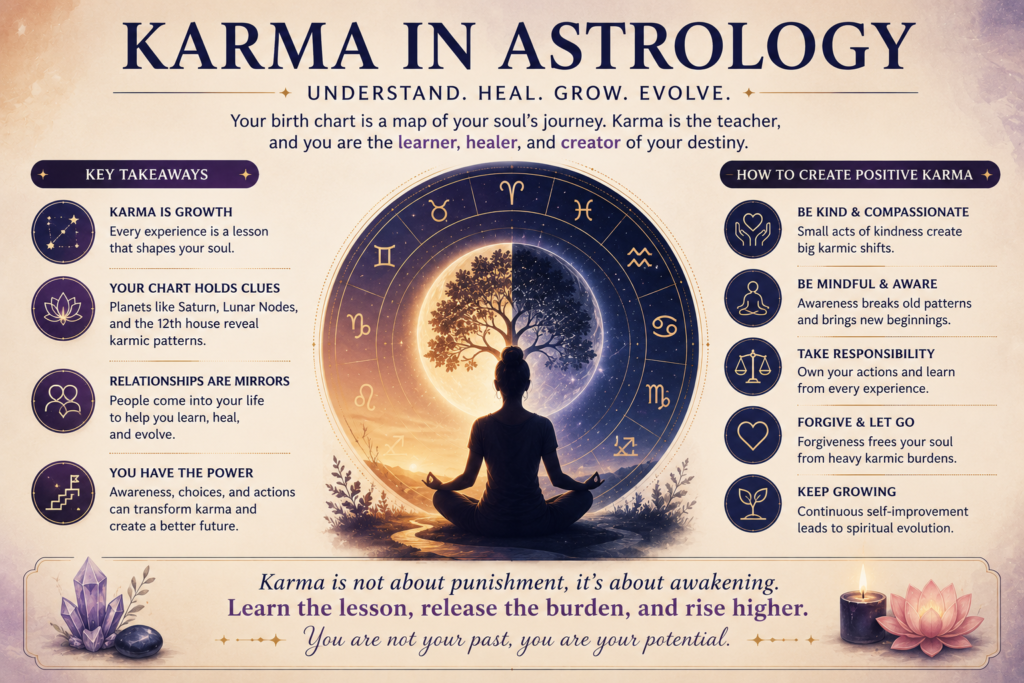
- Practicing kindness and compassion.
- Taking responsibility for your actions.
- Learning from past mistakes.
- Forgiving yourself and others.
- Developing healthy habits.
- Making thoughtful decisions instead of reacting impulsively.
- Embracing personal growth and continuous learning.
Many astrologers believe that conscious choices help shape your future experiences.
Karma in Astrology and Zodiac Signs
Every zodiac sign approaches karmic lessons differently.
- Aries learns patience and thoughtful leadership.
- Taurus explores stability while embracing healthy change.
- Gemini develops honest communication and curiosity.
- Cancer strengthens emotional balance and family connections.
- Leo learns humility alongside confidence.
- Virgo balances perfectionism with self-acceptance.
- Libra focuses on fairness and healthy relationships.
- Scorpio experiences transformation and emotional healing.
- Sagittarius seeks wisdom through exploration and learning.
- Capricorn develops responsibility with balance.
- Aquarius learns individuality while supporting community.
- Pisces grows through compassion, intuition, and spiritual awareness.
How to Create Positive Karma
You don’t need complex rituals to create positive karma. Small, consistent actions often have the greatest impact.
Here are a few mindful practices:
- Help others without expecting rewards.
- Speak honestly and respectfully.
- Practice gratitude daily.
- Reflect through meditation or journaling.
- Learn from difficult experiences.
- Stay open to personal growth.
- Treat yourself and others with compassion.
Frequently Asked Questions
Is karma real in astrology?
Astrology treats karma as a symbolic and spiritual concept rather than a scientifically established fact. Many people use it as a framework for self-reflection and personal development.
Does everyone have karmic lessons?
Many astrological traditions suggest that every individual experiences lessons that encourage growth, maturity, and greater self-awareness.
Can astrology remove bad karma?
Astrology is not believed to remove karma. Instead, it can provide symbolic insights that help people make more conscious decisions and respond thoughtfully to life’s challenges.
Final Thoughts
Karma in Astrology reminds us that every experience offers an opportunity to learn, grow, and evolve. Rather than seeing challenges as obstacles, astrology encourages us to view them as lessons that build wisdom, resilience, and compassion.
Whether you’re exploring your birth chart for the first time or deepening your spiritual journey, understanding Karma in Astrology can inspire greater self-awareness and intentional living. Remember, astrology offers guidance—not certainty—and your choices, mindset, and actions continue to shape your path every day.
Learn more about the planet Mercury on NASA’s Mercury page.
Want to understand your monthly predictions in more detail? Read our August 2026 Monthly Horoscope.