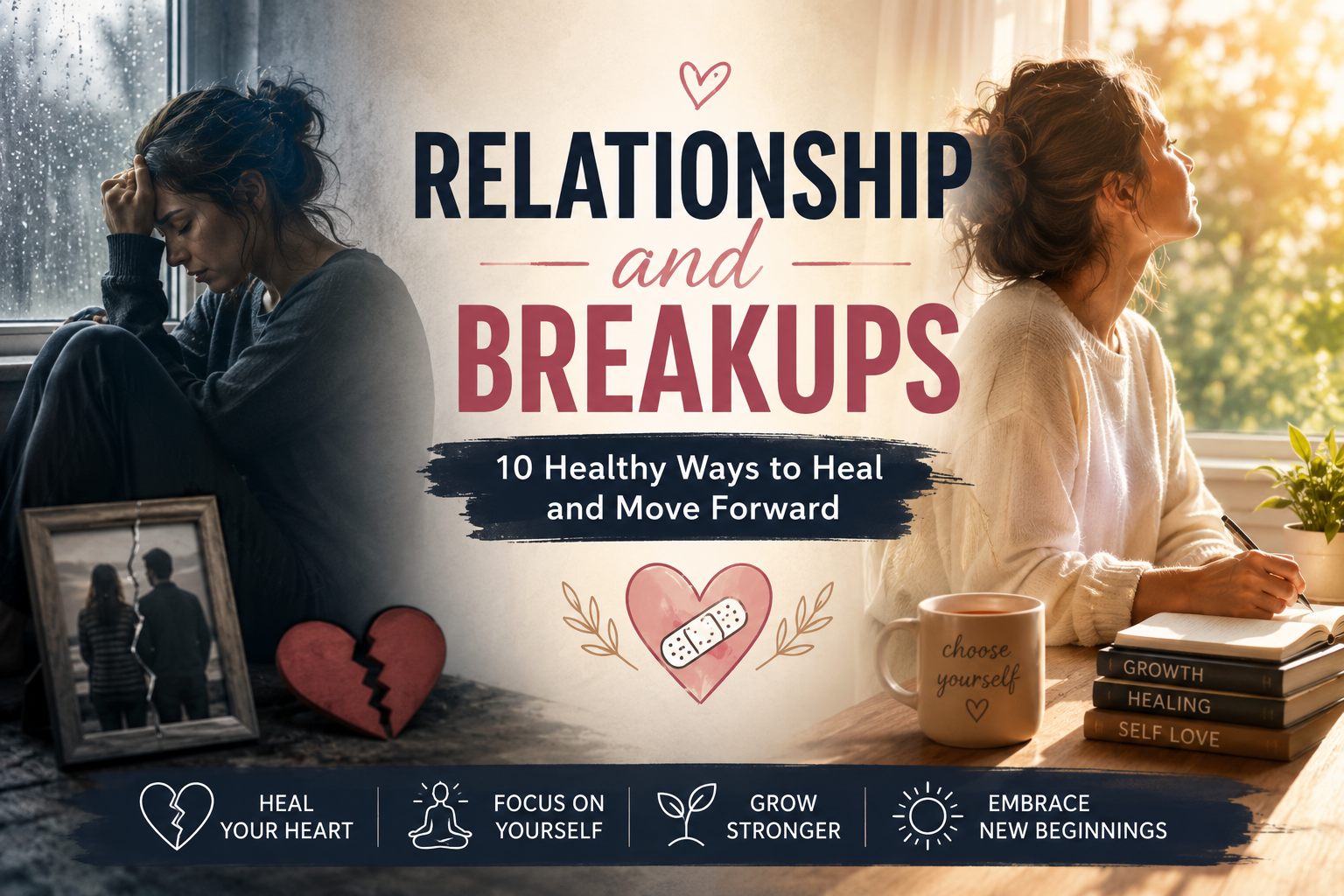
Relationship and Breakups: 10 Healthy Ways to Heal and Move Forward
Relationships are one of the most meaningful parts of our lives. They bring love, companionship, support, and personal growth. However, not every relationship lasts forever. When a relationship ends, the emotional pain can feel overwhelming. Understanding relationship and breakups can help you heal, grow, and build healthier connections in the future.
In this guide, we’ll explore why breakups happen, how they affect us emotionally, and the best ways to move forward after a relationship ends.

Understanding Relationship and Breakups
A relationship is a bond between two people built on trust, communication, respect, and emotional connection. While many relationships thrive, some face challenges that become difficult to overcome.
Breakups are a natural part of life. They can occur due to differences in values, lack of communication, trust issues, incompatibility, personal growth, or changing life goals.
Although breakups are painful, they often create opportunities for self-discovery and personal development.
Common Reasons Relationships End
1. Lack of Communication
Poor communication is one of the leading causes of relationship problems. When partners stop expressing their feelings openly, misunderstandings can grow.
2. Trust Issues
Trust is the foundation of every healthy relationship. Once trust is broken, rebuilding it can be difficult.
3. Different Life Goals
Sometimes two people simply want different things from life. Career ambitions, family plans, and lifestyle choices may create distance.
4. Emotional Disconnect
Over time, couples may drift apart emotionally, making it harder to maintain intimacy and connection.
5. Unresolved Conflicts
Constant arguments without resolution can create resentment and emotional exhaustion.
Emotional Stages After a Breakup
Everyone experiences breakups differently, but many people go through similar emotional stages:
Shock and Denial
Initially, it may be difficult to accept that the relationship has ended.
Sadness
Feelings of grief, loneliness, and disappointment are common.
Anger
You may feel frustrated with your ex-partner or even yourself.
Acceptance
Gradually, you begin to understand the situation and move forward.
Growth
Eventually, many people emerge stronger, wiser, and more self-aware.
10 Healthy Ways to Heal After a Breakup
1. Allow Yourself to Feel
Don’t suppress your emotions. Give yourself permission to cry, grieve, and process your feelings.
2. Maintain No Contact
Taking a break from communication can help create emotional space for healing.
3. Focus on Self-Care
Eat nutritious food, exercise regularly, and prioritize sleep.
4. Spend Time with Loved Ones
Friends and family can provide emotional support during difficult times.
5. Avoid Idealizing the Past
Remember both the positive and negative aspects of the relationship.
6. Start a New Hobby
Learning something new can boost confidence and redirect your focus.
7. Practice Mindfulness
Meditation, journaling, and deep breathing exercises can help reduce emotional stress.
8. Set Personal Goals
Focus on your career, education, fitness, or personal development.
9. Limit Social Media Stalking
Constantly checking your ex’s profile can slow down the healing process.
10. Seek Professional Help if Needed
If you are struggling to cope with emotional pain, consider seeking guidance from a mental health professional. Resources such as Psychology Today can help you find licensed therapists and relationship counselors.
Under “Practice Mindfulness”
Mindfulness techniques such as meditation and journaling can reduce stress and improve emotional well-being. You can learn more about mindfulness practices through Mindful.org.
Under “How Breakups Can Lead to Personal Growth”
Research shows that emotional resilience and self-awareness can improve after difficult life experiences. Educational resources from Greater Good Science Center offer valuable insights into emotional health and personal growth.
How Breakups Can Lead to Personal Growth
While breakups are painful, they often teach valuable life lessons. They help us understand our needs, boundaries, communication patterns, and relationship expectations.
Many people discover greater self-confidence, emotional maturity, and resilience after overcoming heartbreak.
Instead of viewing a breakup as a failure, consider it an opportunity to learn and grow.
Signs You’re Ready for a New Relationship
Before entering a new relationship, ask yourself:
- Have I accepted the end of my previous relationship?
- Can I think about my ex without intense emotional pain?
- Am I happy being alone?
- Do I know what I want in a future partner?
- Am I seeking love rather than validation?
If your answer is yes to most of these questions, you may be ready to move forward.

Final Thoughts
Understanding relationship and breakups is essential for emotional well-being and personal growth. While the end of a relationship can be heartbreaking, it does not define your future. Healing takes time, patience, and self-compassion.
Every breakup carries a lesson, and every ending creates space for a new beginning. Focus on your growth, prioritize your happiness, and trust that better experiences lie ahead.
Frequently Asked Questions About Relationship and Breakups
How do I heal after a breakup?
Healing after a breakup involves self-care, emotional acceptance, spending time with loved ones, and focusing on personal growth.
Why are relationship and breakups emotionally painful?
Relationship and breakups are emotionally painful because they involve attachment, shared memories, and changes in daily life.
Can a breakup help personal growth?
Yes, many people find that relationship and breakups help them develop emotional maturity, self-awareness, and stronger relationship skills.
How long does it take to recover from a breakup?
Recovery time varies for everyone. Some people heal within months, while others may need longer depending on the relationship and circumstances.
If you’re curious about long-term commitment, don’t miss our guide on The Most Loyal Zodiac Signs in Relationships.